
Large Aperture High-Precision Convex Aspheric Mirror Detection: From Challenges to Solutions
In high-end optical systems, there is a type of lens that is quite "special": it is not spherical, not a simple asphere, but a convex aspheric mirror — its surface has different curvatures in multiple directions, "projecting" like a steep slope. It has superior optical performance, but is extremely difficult to detect. In this article, we will discuss: What are the typical applications of convex aspheric mirrors? Why are traditional detection methods insufficient? How can CGH detection push the limits?
1. Convex Aspheric Mirrors: The "Core Component" of High-Performance Optics
Aspheric optical elements, due to their increased degrees of freedom, have significant effects on aberration correction, image quality improvement, and the reduction of system size and weight when reasonably designed and used. Therefore, aspheric optical elements are increasingly being used in fields such as space optics, military defense, and high-tech civilian applications. Especially in space optics, secondary mirrors of astronomical telescopes are often large convex aspheric mirrors. For example, the secondary mirror of the James Webb Space Telescope (JWST), which will replace the Hubble Space Telescope, has a diameter of 738 mm. Some ground-based astronomical telescopes have secondary mirrors that are several meters in diameter, such as the 30-meter telescope (TMT) with a secondary mirror design diameter of 3.1 m; the secondary mirror of the Large Synoptic Survey Telescope (LSST) is a 3.4 m convex aspheric mirror. As space optical technology continues to develop, the specifications and precision requirements for convex aspheric mirrors are also becoming increasingly high. This places greater demands on the surface shape detection accuracy of convex aspheric mirrors, as high-precision surface shape detection is the foundation for precision processing.
2. What Are the Traditional Detection Methods? Why Can’t They Meet the Demands?
In industrial production and research, common detection methods mainly include:
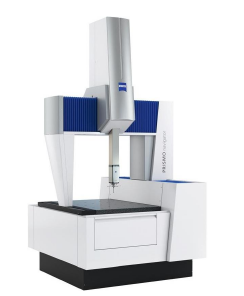
➤ 1. Coordinate Measuring Machine (CMM): Mechanical probes for point measurement, intuitive data, mature operation.
Limitations:
CMM (Coordinate Measuring Machine): It is particularly sensitive to optical surfaces, especially those with high curvature. The probe contact can damage the surface, and it is difficult to obtain high-precision measurement results, typically at the micron level.
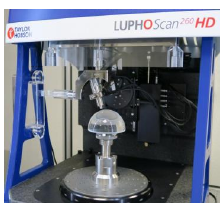
Luphoscan Profiling Scanner: This is a commonly used non-contact detection device in the industry, which uses laser interference scanning for 3D surface reconstruction. Its advantage lies in being very friendly for mass standardized production, balancing both precision and efficiency.
Limitations:
Luphoscan Profiling Scanner: It performs well for rotationally symmetric aspheres, spheres, etc., but the measurement accuracy and stability for off-axis convex aspheric mirrors with apertures larger than 600 mm have not been fully validated. Additionally, large-aperture Luphoscan profiling scanners are very expensive.
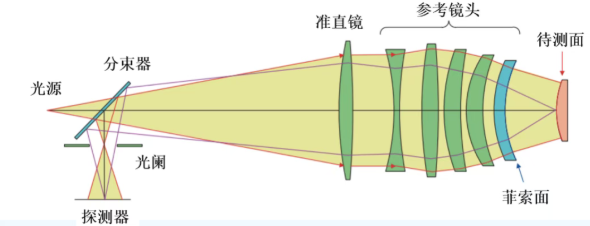
Traditional Interferometric Measurement: Classic interferometers can theoretically measure precision optics, but the reference wavefront is difficult to match the aperture of convex aspheric mirrors. The complex shape of the fringes causes extreme distortion, and it is difficult to stably solve for consistent surface data. As the size of the convex aspheric mirror increases and the shape becomes more complex, these issues are magnified.
3. From "Inaccurate Measurement" to "Quantifiable" — How CGH Breaks Through Convex Aspheric Mirror Measurement
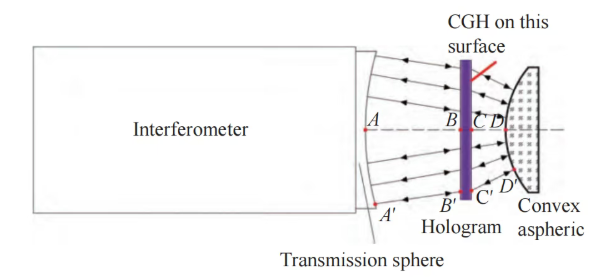
CGH, which stands for Computer Generated Hologram, is essentially an optical diffraction element designed through computation. It can convert a standard reference wavefront into a wavefront that "matches" the measured surface, allowing the interferometer to form analyzable interference fringes. The main issue with traditional interferometric measurements is the mismatch of the reference wavefront, while the design of CGH is specifically aimed at "compensating for this mismatch."
The principle can be understood as follows: the interferometer emits a standard spherical/plane wave, and the CGH diffracts the wavefront to "customize" it, outputting a wavefront that matches the convex aspheric surface being measured. The reflected wave from the measured mirror is then converted by the CGH into an analyzable interference wavefront, and the interferometer captures stable, solvable fringes. This method greatly improves the detection stability and accuracy.
4. Large-Aperture Convex Aspheric Mirror Detection: Stitching + CGH Technology Combination
As convex aspheric mirrors become larger, steeper, and deeper, a single CGH or traditional measurement method cannot cover the entire optical surface at once. The industry's solution in such cases is: CGH compensation + sub-region stitching measurement. This approach has become the mainstream method for high-precision detection of large-aperture convex aspheric mirrors. Its key logic is as follows:
OMeda (Shanghai Omedasemi Co.,Ltd) was founded in 2021 by 3 doctors with more than 10 years of experience in nanpfabrication. It currently has 15 employees and has rich experience in nanofabrication (coating, lithography, etching, two-photon printing, bonding) and other processes. We support nanofabrication of 4/6/8-inch wafers.
